
Chapter 1 - Basic Properties and Hazards of Petroleum
Chapter overview
This chapter looks at the physical and chemical characteristics of petroleum liquids that pose a risk during handling operations. These are the flammability of petroleum, the effects of the density and vapour pressure of petroleum gases, and vapours and their toxic properties.
Other issues covered include pyrophoric iron sulphides forming in cargo tanks and the hazards associated with handling, storing and carrying residual fuel oils.
Practical guidance for gas testing operations is in chapter 2, which also addresses gas evolution and dispersion.
1.1 Vapour pressure
1.1.1 True Vapour Pressure
Crude oils and petroleum products are mixtures of a wide range of hydrocarbons, i.c. chemical compounds of hydrogen and carbon. The boiling points of these compounds range widely, Their volatility depends, primarily, on the relative quantities of the more volatile constituents, i.c, those with a lower boiling point.
Volatility is the tendency of a crude oil or petroleum product to produce gas and is characterised by the vapour pressure. When a petroleum mixture is transferred to an empty tank or container it starts to vaporise, so gas forms in the space above it.
This gas tends to re-dissolve in the liquid until it reaches an equilibrium, with a certain amount of gas evenly distributed throughout the space. The pressure this gas exerts is the equilibrium vapour pressure of the liquid, usually known simply as the vapour pressure.
The vapour pressure of a pure compound depends on its temperature alone. The vapour pressure of a mixture depends on its temperature, constituents and volume of the gas in the vaporisation space. In other words, it depends on the ratio of gas to liquid by volume.
The pressure exerted by a gas produced from a mixture when the gas and liquid are in equilibrium at the prevailing temperature is the True Vapour Pressure (TVP), or vapour pressure at the bubble point. It is the highest possible vapour pressure at any specified temperature.
As the temperature of a petroleum mixture increases, its TVP increases. If the TVP exceeds atmospheric pressure, the liquid starts to boil.
The TVP of a petroleum mixture indicates its ability to produce gas. The TVP is extremely difficult to measure, although it can be calculated from a detailed knowledge of the composition of the liquid. For crude oils, it can be estimated from the stabilisation conditions, allowing
for any subsequent changes of temperature or composition. In the case of products, reliable correlations exist for deriving TVP from the more readily measured Reid Vapour Pressure (RVP) and temperature.
1.1.2 Reid Vapour Pressure
The RVP test is a simple, widely used method for measuring the volatility of petroleum liquids.
It is conducted with standard equipment and in a closely defined way. A sample of the liquid is introduced into the test container al atmospheric pressure so that the volume of the liquid is onc fifth of the total internal volume of the container. The container is sealed and immersed in a water bath where it is heated to 37.8°C. After the container has been shaken to produce equilibrium conditions, the pressure, now increased due to vaporisation, can be seen on an attached pressure gauge. This reading is a close approximation to the absolute vapour pressure of the liquid at 37.8°C.
RVP is useful for comparing the volatilities of a wide range of petroleum liquids in a general way. However, because it measures at the standard temperature of 37.8°C and at a fixed gas/liquid ratio, it is of little value in estimating the likely gas evolution in specific situations. For this purpose, TVP is much more useful.
1.2 Flammability
1.2.1 General
Flammability is the primary and always present risk when handling petroleum.
When hydrocarbon gases burn, they react with the oxygen in the air to produce carbon dioxide (C02) and water. The reaction produces enough heat to form a flame that travels through the mixture of hydrocarbon gas and air. When the gas above a liquid hydrocarbon is ignited, the heat is usually enough to evaporate enough fresh gas to maintain the flame. While it looks as though the liquid is on fire, it is in fact the gas that is burning, being continuously replenished from the liquid.
1.2.2 Flammable limits
A mixture of hydrocarbon gas and air cannot ignite and burn unless its gas-in-air concentration lies within the flammable range. The lower limit of this range, known as the Lower Flammable Limit (LFL), is the hydrocarbon concentration below which there is nat enough gas to support combustion (too lean). The upper limit, known as the Upper Flammable Limit (UFL), is the concentration above which there is not enough air to support combustion (too rich).
The flammable limits vary for different pure hydrocarbon gases and for the gas mixtures derived from different petroleum liquids. For practical purposes, the gas mixtures from crude oils, motor or aviation gasolines and natural gasoline products can be represented by the pure hydrocarbon gases propane, butane and pentane, Table 1.1 gives the flammable limits for these three gases and the dilution needed for each to bring a mixture of 50% by volume in air down to the LFL. This shows that vapours will disperse with ease to a non-flammable concentration in the atmosphere.
In practice, and for general purposes, the LFL and UFL of crude oil and petroleum products can be taken as 1% and 10% by volume, respectively.
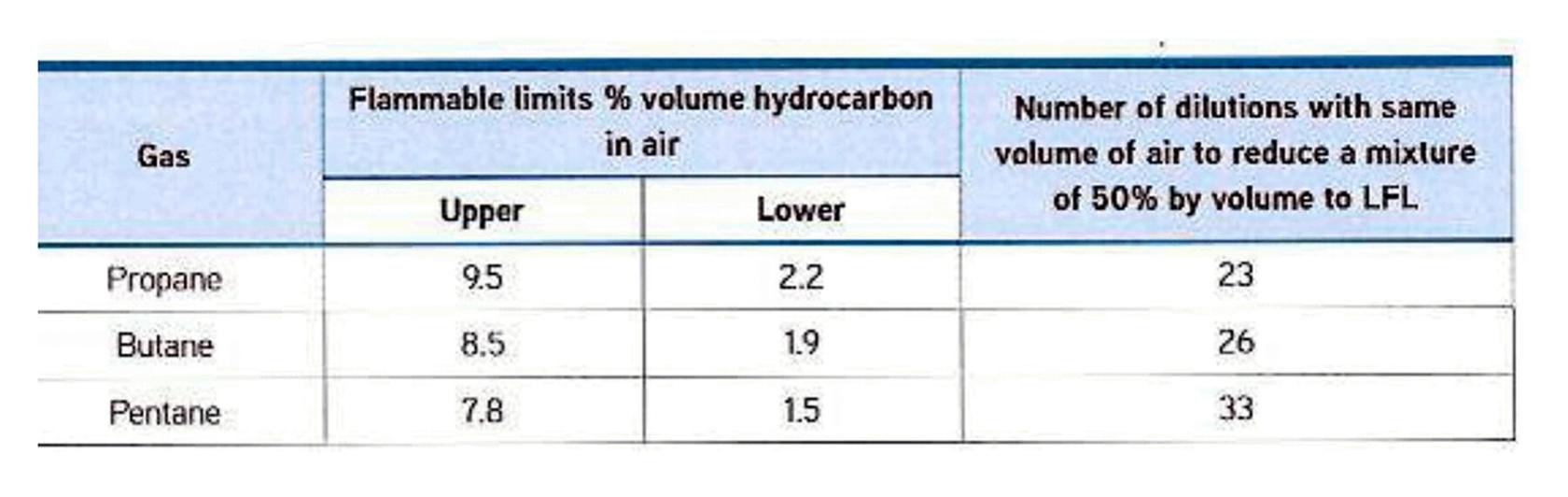
Table 1.1 - Flammable limits of propane, butane and pentane
1.2.3 The effect of Inert Gas on flammability
When Inert Gas (IG) is added to a hydrocarbon gas/air mixture, the result is to increase the LFL hydrocarbon concentration and to decrease the UFL concentration. These effects are shown in Figure 1.1.
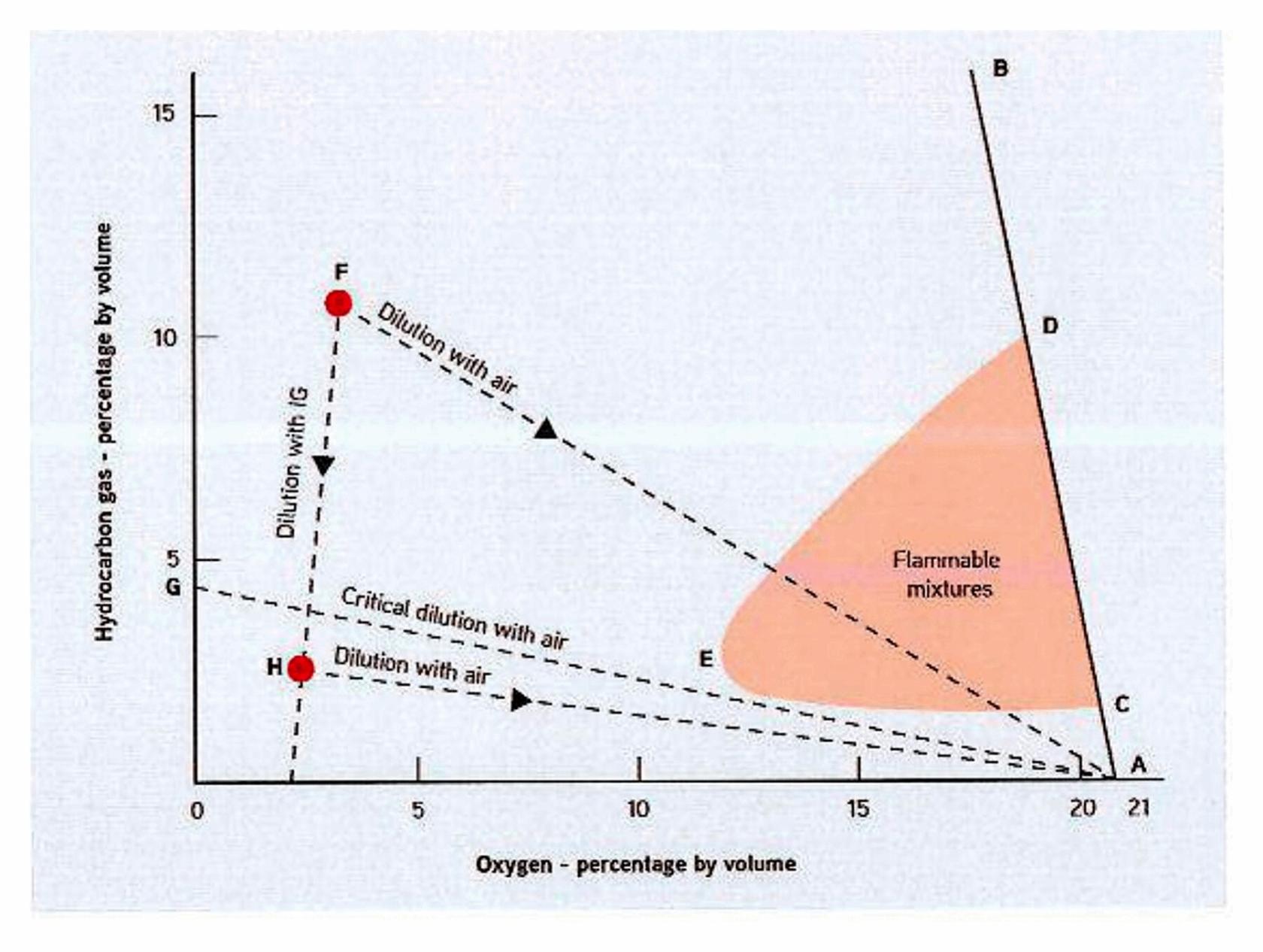
Figure 1.1 - Flammability composition diagram for a hydrocarbon gas, air and inert gas mixture
(This diagram is illustrative only and should not be used for deciding acceptable gas composition in practical cases.)
Every point on the diagram represents a hydrocarbon gas/air/IG mixture in terms of its hydrocarbon and oxygen content. Hydrocarbon gas/air mixtures without IG lic on the line AB, its slope reflecting the reduction in oxygen content as the hydrocarbon content increases. Points to the left of the line AB represent mixtures with their oxygen content further reduced by the addition of IG.
The points C and D represent the lower and upper flammability limit mixtures for hydrocarbon gas in air. As the IG content increases, the flammable limit mixtures change as indicated by the lines CE and DE, which converge at the point E. Only those mixtures in the shaded area within the loop CED can burn.
On this diagram, the addition of either air or IG is represented by movements along straight lines directed either towards the point A (pure air) or a point on the oxygen content axis corresponding to the composition of the added IG. Such lines are shown for the gas mixture represented by the point F.
Figure 1.1 demonstrates that as IG is added to hydrocarbon gas/air mixtures, the flammable range decreases until the oxygen content reaches a level, generally about 11% by volume, when no mixture can burn. This guide specifies a margin beyond this value, of a safely inerted gas mixture of 8% by volume of oxygen.
When an inerted mixture like that at point F is diluted by air, its composition moves along the line FA and enters the shaded arca of flammable mixtures. This means that all inerted mixtures in the region above the line GA go through a flammable condition as they are mixed with air, e.g. during a gas freeing operation.
Those mixtures below the line GA, like that at point H, do not become flammable on dilution. Note that it is possible to move from a mixture like F to one like H by dilution with additional IG, i.e. by purging to remove hydrocarbon gas.
1.2.4 Tests for flammability
Since hydrocarbon gas/air mixtures are flammable within a comparatively narrow range of concentrations of hydrocarbon gas in air, and concentration in air depends on vapour pressure, in principle it should be possible to test far flammability by measuring vapour pressure. In practice, the wide range of petroleum products, and the range of temperatures they are handled at, has prevented the development of one simple test.
Instead, the oil industry uses two standard methods. One is the RVP test (see section 11.2) and the other is the flashpoint test, which measures flammability directly. However, with some residual fuel oils, the flashpoint test will not always provide a direct indication of flammability (see section 1.6.2).
1.2.5 Flashpoint
In this test, a sample of the liquid is gradually heated and a small flame repeatedly and briefly applied to the surface of the liquid. The flashpoint is the lowest liquid temperature at which the small flame initiates a flash of flame across the surface of the liquid, indicating the presence of a flammable gas/air mixture above the liquid. For all oils, except some residual fuel oils, this gas/air mixture corresponds closely to the LFL mixture.
Flashpoint equipment falls into two classes. In one, as the liquid is heated, the surface is permanently open to the atmosphere. The result of this test is an open cup flashpoint. In the other class, the liquid is kept enclosed except when the initiating flame is briefly introduced through a small port. The result of this test is a closed cup flashpoint.
The greater loss of gas to atmosphere in the open cup test means the open cup flashpoint of a petroleum liquid is always a little higher (by about 6°C) than its closed cup flashpoint. The restricted loss of gas in the closed cup equipment also produces a much more consistent result. For this reason, the closed cup method is generally favored and used in this guide when considering the classification of petroleum. However, open cup test figures may still be found in some national legislation, in Classification Society rules and other similar documents.
1.2.6 Flammability classification of petroleum
Many schemes exist for dividing the complete range of petroleum liquids into different flammability classes based on flashpoint and vapour pressure and these schemes vary considerably between countries. Usually, the basic principle is to consider whether a flammable equilibrium gas/air mixture can be formed in the space above the liquid when the liquid is at ambient temperature.
This guide generally groups petroleum liquids into two categories, non-volatile and volatile, defined in terms of flashpoint as:
Non-volatile
A flashpoint of 60°C or above, based on closed cup testing. At any normal ambient temperature these liquids produce equilibrium gas concentrations below the LFL. They include distillate fuel oils, heavy gas oils and diesel oils. Their RVPs are below 0.007 bar and are not usually measured.
Volatile
A flashpoint below 60°C, based on closed cup testing. In some part of the normal ambient temperature range, some petroleum liquids in this category can produce an equilibrium gas/air mixture within the flammable range. At all normal ambient temperature, the majority give equilibrium gas/air mixtures above the UFL. Examples of the former are jet fuels and kerosenes. Examples of the latter are gasolines and most crude oils. In practice, gasolines and crude oils are frequently handled before reaching equilibrium conditions, so gas/air mixtures in the flammable range may be present.
The choice of 60°C as the flashpoint division between non-volatile and volatile liquids is, to an extent, arbitrary. Less stringent precautions are applied to non-volatile liquids, so it is vital that no liquid capable of producing a flammable gas/air mixture is ever included in the non-volatile category. The dividing line should allow for factors such as misjudging the temperature, inaccurate flashpoint measurement and minor contamination by more volatile materials. The closed cup flashpoint figure of 60°C allows for these and is compatible with international definitions.
1.3 Density of hydrocarbon gases
The densities of the gas mixtures evolved from the normal petroleum liquids, when undiluted with air, are all greater than the density of air. Layering effects are therefore encountered in cargo handling operations and can give rise to hazardous situations. This means that layering effects are possible during cargo handling, which can create hazards.
Table 1.2 shows the gas densities relative to air for the three pure hydrocarbon gases, propane, butane and pentane, which roughly represent the gas mixtures produced by crude oils, motor or aviation gasolines and natural gasolines. These figures do not change greatly when IG is substituted for air.
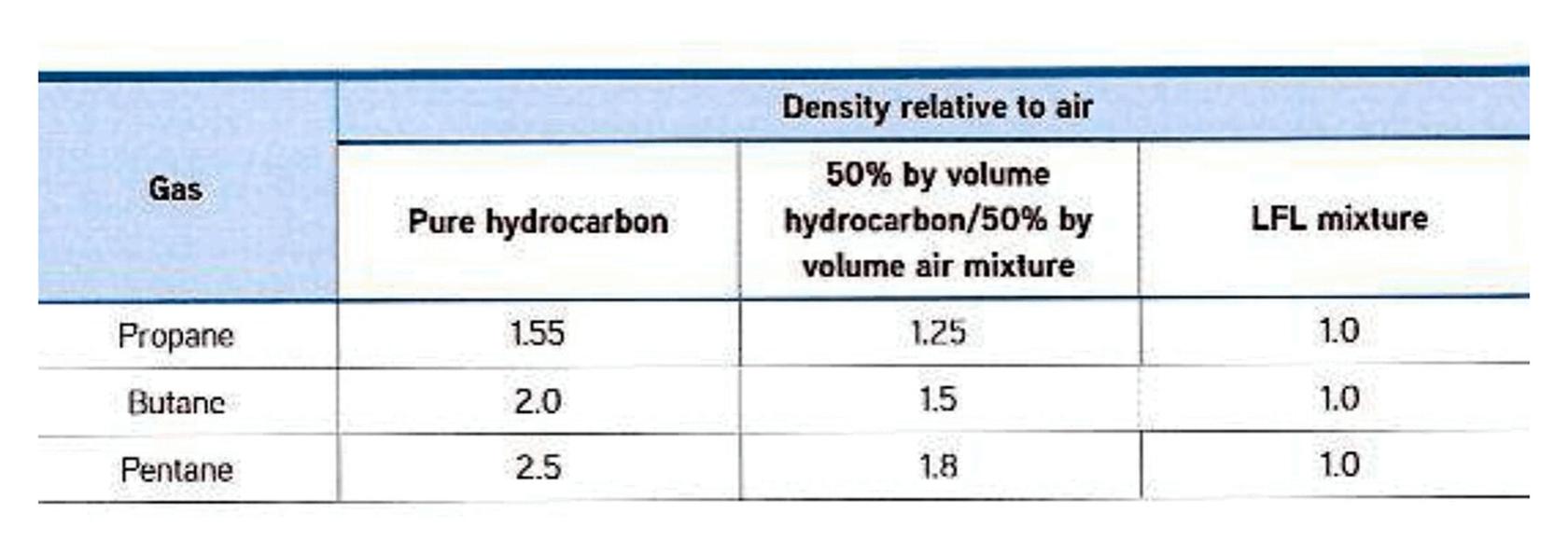
Table 1.2 - Propane, butane and pentane densities relative to air
The density of the undiluted gas from a product (e.g. motor gasoline) is likely to be about twice that of air and from a typical crude oil it is about 1.5 times. These high densities and their resulting layering effects are only significant while the gas remains concentrated. As it is diluted, the density of the gas/air mixture from all three types of cargo approaches that of air. At the LFL it is indistinguishable from air.
1.4 Toxicity
1.4.1 Introduction
Toxicity is the degree to which a substance or mixture of substances can harm humans. It means the same as poisonous.
Toxic substances can enter the human body in three main ways:
- Swallowed (ingestion).
- Skin contact (absorption).
- Via the lungs (inhalation).
Toxic substances may have local effects, e.g. skin or eye irritation, and may also affect other, more widespread parts of the body, known as systemic effects.
This section describes the effects of the toxic substances that tanker and terminal personnel are most likely to encounter. It looks at what happens with both a single and a repeated exposure, and how to reduce the risks. It also covers the effects of oxygen deficiency, although this is not strictly a case of toxicity.
1.4.2 Liquid petroleum
1.4.2.1 Ingestion
Petroleum has low oral toxicity, but when swallowed causes acute discomfort and nausea, When vormiting, liquid petroleum may be drawn into the lungs, which can have serious consequences, especially with more volatile products such as gasoline and kerosene.
1.4.2.2 Absorption
Many petroleum products, especially the more volatile ones, cause irritation when they come in contact with the skin. They remove essential oils and can cause dermatitis. They can also cause irritation to the eyes. Repeated and prolonged contact with certain heavier oils can cause serious skin disorders.
Avoid direct contact with petroleum at all times by wearing the appropriate Personal Protective Equipment (PPE), especially impermeable gloves and goggles.
1.4.3 Petroleum gases
1.4.3.1 Inhalation
When inhaled, even small quantities of petroleum gas can cause symptoms of diminished responsibility and dizziness similar to intoxication, along with headaches and irritation to the eyes. It can be fatal if inhaled in sufficient quantities.
These symptoms can occur at concentrations well below the LFL. However, petroleum gases vary in their effects and people vary in their tolerance of those effects. Even if the conditions can be tolerated, do not assume the gas concentration is within safe limits.
The smell of petroleum gas mixtures is variable and in some cases may dull the sense of smell. This is especially likely, and serious, if the mixture contains hydrogen sulphide (H₂S) (see section 1.4.6).
The absence of the smell of gas should never be taken to indicate the absence of gas.
1.4.3.2 Exposure limits
The toxic hazards personnel are exposed ta in tanker and terminal operations arise almost entirely from liquids, gases or vapours of various kinds. Many of these substances have Occupational Exposure Limits (OELs). These limits protect personnel against harmful exposures in the working environment.
Exposure limits are set by international organizations, national administrations or by local regulatory bodies and should never be exceeded. The limits set by different organizations may differ and operators should adopt those set by their flag or appropriate administration. The limits should be detailed in the Safety Management System (SMS). Where they are not available, adopt those from a country with an internationally recognized occupational hygiene institute or society.
OELs are expressed in parts per million (ppm) by volume of gas in air or milligrams per cubic meter (mg/m3). There are three main types of OEL:
- Time Weighted Average (TWA): TWA values are calculated by taking the sum of exposure during a working day to a toxic contaminant in terms of ppm-hours and dividing by an eight hour period. As averages, TWAs assume short-term exposures above the OEL-TWA that are not high enough to damage health and are compensated by equivalent exposures below the OEL-TWA during the conventional eight hour working day.
- Short-Term Exposure Limits (STEL): these are assigned to substances that cause acute effects. They are higher than the eight hour TWA. The STEL is the maximum average concentration an unprotected worker may be exposed to in any 15 minute interval during the day. Where no specific STEL is available, use a figure three times the long-term (OEL-TWA) exposure limit.
- Ceiling value: this is the concentration of an airborne toxic substance that should not be exceeded at any time during the working day.
OELs protect the health of workers. They are not safe working limits, so exposure should be kept below the limit wherever possible. Best practice is to reduce exposure of all contaminants to As Low As Reasonably Practicable (ALARP).
1.4.3.3 Effects
The main effects of low concentrations of petroleum gas on personnel are headaches and eye irritation, with diminished responsibility and dizziness similar to intoxication. At high concentrations, it can lead to paralysis, unconsciousness and death.
The toxicity of petroleum gases and vapours varies widely depending on their different hydrocarbon constituents. Toxicity can be greatly increased by the presence of some minor components such as aromatic hydrocarbons, e.g. H2S and benzene. Compliance with the OEL. of a ‘total’ hydrocarbon, such as gasoline, docs not ensure compliance with the individual OELs of potentially hazardous constituents, such as H₂S or benzene.
1.4.4 Safety Data Sheets
The Safety Data Sheets (SDSs) should indicate the type and probable concentrations of hazardous or toxic components in the cargo or bunkers to be loaded, particularly H₂S and benzene. The SDS should be United Nations Globally Harmonized System of Classification and Labelling of Chemicals (UN GHS) compliant.
The supplier is responsible for providing the relevant SDS to a tanker before it starts loading an oil cargo or bunker fuel. The tanker is responsible for providing the receiver with an SDS for the cargo to be discharged. The tanker should also advise the terminal, and any tank inspectors or surveyors, whether the previous cargo contained any toxic substances (see section 25.4).
An SDS does not guarantee that all the hazardous or toxic components of the cargo or bunkers being loaded have been identified or documented. An SDS can be generic and may not directly reflect the specific composition of the cargo or fuel described. Tanker and terminal operators should have procedures and equipment to verify the actual levels of toxic components present in cargoes and/or bunkers loaded or discharged.
For International Convention for the Prevention of Pollution from Ships (MARPOL) Annex | cargoes, the term Material Safety Data Sheets (MSDSs) may still be used and referenced in industry documents.
1.4.5 Benzene and other aromatic hydrocarbons
1.4.5.1 Aromatic hydrocarbons
The aromatic hydrocarbons include benzene, toluene and xylene. They are components, in varying amounts, in many petroleum cargoes, e.g. gasoline, gasoline-blending components, reformate, naphtha and crude oil.
Personnel engaged in cargo operations involving products containing aromatic hydrocarbons should follow the precautions and procedures in sections 12.1.6.6 (closed loading) and 12.8.4 (measuring and sampling) in order to minimize their exposure during cargo handling operations, The OEL of an aromatic hydrocarbon vapour is generally lower than other hydrocarbons.
1.4.5.2 Benzene
Exposure to concentrations of benzene vapours of only a few ppm in air can affect bone marrow and cause anaemia and leukaemia.
The International Maritime Organization (IMO) has established minimum standards for ships carrying liquids in bulk with a benzene content of 0.5% or more: see MSC/Circ.1095 Revised Minimum Safety Standards for Ships Carrying Liquids in Bulk Containing Benzene, These standards cover requirements for transferring information on the cargo by SDS, OELs, air quality monitoring, PPE and its maintenance, medical monitoring and precautions during cargo operations.
There is some crossover between cargoes containing benzene in MARPOL Annex | and some of the precautions to be followed as defined by MARPOL Annex Ii and the associated /nternational Code for the Construction and Equipment of Ships Carrying Dangerous Chemicals in Bulk (IBC Code) and the Code for the Construction and Equipment of Ships Carrying Dangerous Chemicals in Bulk (BCH Code). The following guidance provides general advice on precautions to be adopted by oil tankers carrying cargoes containing benzene at concentrations of less than 0.5%.
Benzene primarily presents an inhalation hazard. It provides little warning as its odour threshold is above the OEL levels. Benzene is heavier than air, with a relative vapour density of 2.8 that means it may accumulate in low level areas.
Exposure to concentrations over 1,000ppm can lead to unconsciousness and even death. Benzene can also be absorbed through the skin and is toxic if ingested.
For practical guidance on measures to minimise the risks associated with loading cargoes containing benzene, see section 12.1.10.1.
Operators should refer to their Flag State or national authority to confirm applicable OELs for benzene.
Benzene is a carcinogen, so exposure should always be reduced to below the OEL or respiratory protection provided, following the hierarchy of control principles (see section 4.2.3).
Personal Protective Equipment
Personnel should wear Self-Contained Breathing Apparatus (SCBA) when:
- They are at risk of being exposed to unknown concentrations of benzene vapours or levels that exceed the OEL-TWA.
- National or internationally specified OEL-TWAs are likely to be exceeded.
- Monitoring cannot be carried out.
- Closed operations cannot be carried out for any reason.
The tanker operator should decide what other Respiratory Protective Equipment (RPE) should be worn, but this should not fall below the regulations or guidance required by the IMO. Local regulations or company procedures may extend the need to use RPE to personnel not directly involved in cargo operations (see section 10.13).
Operators should be aware of the stated lower limit of detection and accuracy range of gas detection equipment used, and that portable gas measuring equipment can only provide spot readings. Personnel may also find concentrations of vapour that exceed the readings, so carefully consider the type of RPE used for specific tasks.
Operators should keep records of all employees engaged in handling cargoes that contain benzene. Personnel carrying out tasks, e.g. cargo gauging and sampling, or disconnecting cargo hoses after transfer, should be made aware of the hazards of benzene.
Tank entry
Before anybody enters a tank that has recently contained petroleum, the tank should be tested for benzene concentrations. This is in addition to the requirements for entering enclosed spaces given in chapter 10.
1.4.6 Hydrogen sulphide
Hydrogen sulphide (H₂S) is a toxic, corrosive and flammable gas. It has a very low odour threshold and distinctive rotten egg smell. H₂S is colourless, heavier than air with a relative vapour density of 1.189 and is soluble in water.
1.4.6.1 Sources of hydrogen sulphide
Many crude oils come out of the well with high levels of H₂S, but a stabilisation process usually i reduces this level before the crude oil is delivered to the tanker. However, the level of stabilisation may be reduced at times and a tanker may receive a cargo with an H₂S content higher than usual or expected. Some crude oils are never stabilized and always contain high levels of H₂S.
H₂S can also be found in refined products, e.g. naphtha, gas oil, bitumen and fuel oil, carried on board either as cargo or marine bunker fuel.
As a by-product of the refining process, fuel oil is a mixture of different types of residues, both from the crude distillation units (straight run residues) and from the conversion units (cracked/converted residues). The mixture of less stable residues can mean H₂S is slowly released even though testing at the time of production indicated no H₂S present.
For residual marine fuels typically used as bunker fuel, the applicable International Organization for Standardization (ISO) Standard (currently ISO 8217-2017) defines an H₂S limit of 2mg/kg (2ppm by weight). This limit can still lead to high accumulations of H₂S in the vapour space of bunker tanks. Applying heat to the fuel oil will also promote the release of H₂S from the liquid into the vapour phase.
H₂S scavengers based on nitrogen-based compounds (triazines) or oxygen-based compounds (aldehydes) can be used as additives to depress H₂S in final products, but overdosage can create issues with sediments and odour.
Cargo and bunker fuels should not be treated as free of HzS until after they have been loaded and the absence of H₂S has been confirmed by the results of initial and ongoing monitoring and by the information in the relevant SDS.
1.4.6.2 Expected vapour concentrations
It is important to distinguish between concentrations of H₂S in the atmosphere, expressed in ppm by volume, and concentrations in liquid, expressed in ppm by weight.
Predicting the likely vapour concentration from any given liquid concentration is not possible but, as an example, a crude oil containing H₂S at 70 ppm (by weight) has been shown to produce a concentration of 7,000 ppm (by volume) in the gas stream leaving the tank vent.
Precautions against high H₂S concentrations are normally necessary if the H₂S content in the vapour phase is 5ppm by volume or above.
The effects of H₂S at various increasing concentrations in air are shown in table 1.3.
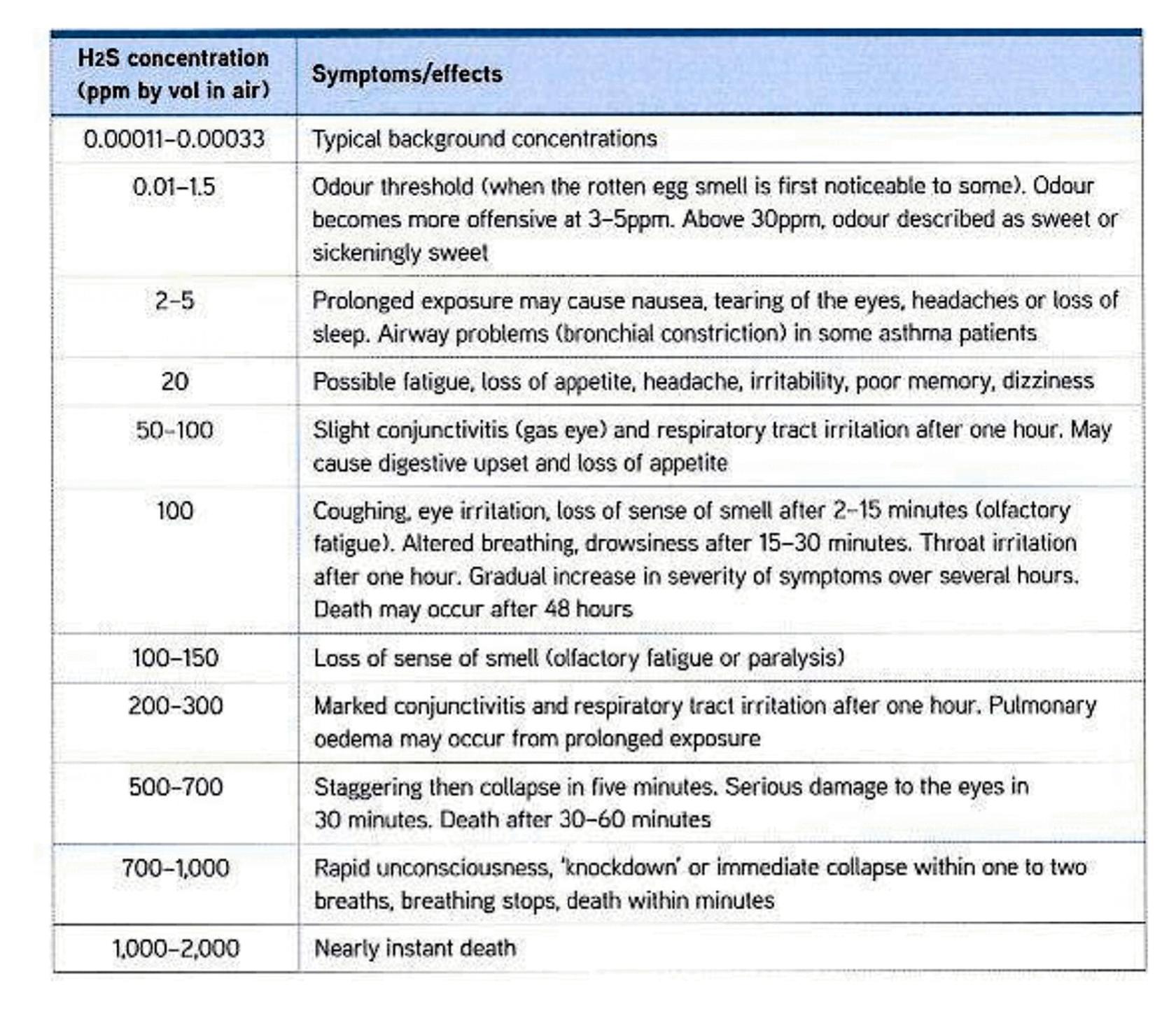
Table 1.3 - Typical effects of exposure to hydrogen sulphide (Source - Occupational Safety and Health Administration (OSHA)).
The H₂S concentration in the vapour space will vary greatly and depends on factors such as:
- Liquid H₂S content.
- Amount of air circulation.
- Temperature of air and liquid.
- Liquid level in the tank.
- Amount of agitation.
1.4.6.3 Guidance for handling cargo and bunkers containing hydrogen sulphide
Take the following precautions when handling all cargoes and bunker fuels likely to contain hazardous concentrations of H₂S. Also take them when ballasting, cleaning or gas freeing tanks that previously contained a cargo with H₂S content. Practical guidance on operational measures to minimise the risks associated with loading cargoes containing H₂S is in section 12.1.9.
1.4.6.3.1 Vapour monitoring
Exposure levels in all work locations should be monitored using suitable instrumentation for detecting and measuring the concentration of the gas.
High concentrations and the corrosive nature of the gas can darnage electronic gas detection instruments. Low concentrations of H₂S can have a similar effect over time. Some portable gas monitoring equipment may have a dedicated channel for high H₂S so that other sensors are not damaged. Gas detection tubes, or similar equipment, should be used if it is necessary to monitor high concentrations. Operators should be aware of the stated lower limit of detection and accuracy range of the gas detection equipment used.
The Energy Institute’s HM 69. Procedures for determining H₂S concentration in cargo tank head spaces summarises good practice used within the industry. It recommends suitable vapour space sampling equipment that allow a closed sampling arrangement, minimising the operator's potential exposure to the vapour tested.
Bunker fuel tanks should be monitored before, during and after bunkering. If H₂S has been detected, the bunker tank should be regularly tested. Gas testing bunker tank vapour spaces should be risk assessed, considering the design of the bunker tanks, and appropriate measures taken to ensure the safety of personnel.
If H₂S might be present, bridge, control room, accommodation and engine spaces should be monitored. Ventilation systems should be operated to prevent H₂S vapours entering the accommodation and engine spaces. Low concentrations of H₂S over time can cause discomfort to personnel.
Personal measuring equipment
Personal H₂S gas monitoring instruments for personnel engaged in cargo operations is strongly recommended. These instruments may provide either a warning alarm at a pre-set level or an H₂S reading and an alarm. The alarms should be set at a value of 5 ppm.
Personnel should always carry personal monitors whenever HeS concentrations could exceed the OEL-TWA. Examples of these occasions include but are not limited to:
- Gauging.
- Sampling.
- Entering a pumproom.
- Connecting and disconnecting lines/hoses.
- Cleaning filters.
- Draining to open containment.
- Mopping up spills.
Personal gas monitors normally have an instantaneous alarm that activates when concentrations of H₂S exceed a set threshold, but may also have time-weighted alarms that trigger when the average concentration over the measurement periad (typically 15 minutes or eight hours) exceeds other thresholds, e.g. OEL-STEL or OEL-TWA.
Unless the personal gas monitor has the functionality of raising alarms simultaneously for OEL-TWA and pre-set instantaneous readings, then instantaneous alarms should be selected rather than OEL-TWA alarms.
As an instrument may have several programable alarm limits, the safest approach to any alarm activation is to vacate the area and confirm the content from a safe location.
Users should understand each alarm setting. The operator's procedures should also assign clear actions to each setting.
Passive sampling badges are simple exposure monitoring devices and should never be used as an item of PPE.
1.4.6.3.2 Personal Protective Equipment
Consider providing Emergency Escape Breathing Devices (EEBDs) to personnel working in hazardous areas. These can be put on quickly if gas is detected.
Personnel should wear RPE under the following circumstances:
- Whenever there is a risk of exposure to HeS vapours that either exceed the OEL-TWA, or when there is a potential that OEL-TWA levels set by national or international authorities are likely to be exceeded.
- When monitoring cannot be carried out.
- When closed operations cannot be conducted for any reason and H₂S concentrations could exceed the OEL-TWA.
See section 4.8.1 on PPE.
1.4.6.3.3 Tanker and terminal systems for managing safety
Systems for managing safety should include procedures to ensure safe operations when handling cargo and bunker fuels that may contain H₂S. The procedures should include, but not be limited ta:
- Training all tanker and terminal personnel in the hazards associated with H₂S and the precautions to reduce the risks to acceptable levels.
- Gas testing/atmosphere monitoring procedures.
- Additional safety measures for routine cargo operations when H₂S is present.
- Maintenance procedures for cargo related systems.
- PPE requirements.
- Contingency planning.
- Emergency response measures.
- Measures to protect visitors from exposure.
1.4.6.4 Additional procedures when handling cargoes with very high concentrations of hydrogen sulphide
Companies and terminals should develop additional procedures for handling cargoes with very high levels of H₂S, e.g. when 100ppm or more is detected in the vapour space.
EEBDs should be readily available to all personnel working in hazardous areas. They should already have a personal H₂S gas monitoring instrument.
Personnel should be instructed that if their alarm activates, they should put on the EEBD and immediately leave the area to an upwind location. They should advise the central control location of high gas concentrations so that appropriate procedures can be initiated.
When very high concentrations of H₂S are likely, SCBA should always be worn if it is necessary to breach the integrity of the cargo system and a vapour free atmosphere cannot be guaranteed. This would include the following activities:
- Gauging and sampling.
- Removing blanks for connecting the cargo hose or loading arm, or disconnecting the hose and blanking after cargo handling.
- Cleaning filters.
- Draining lines to open containment, e.g. drip trays or savealls.
- Mopping up spills.
Procedures should require personnel to use SCBA. Chemical cartridge respirators should not be used for protection against H₂S vapour as the concentrations in the atmosphere may exceed the protection factor of the respirator used.
1.4.6.5 Corrosion
HeS is very corrosive, so enhanced inspection and maintenance regimes for cargo handling systems should in place if high concentrations of H₂S are likely.
Pressure/Vacuum (P/V) valve seats made of brass are more likely to fail than stainless steel seats.
Mechanical tank gauges are more likely to fail since HS can damage stainless steel tension springs and metals, e.g. brass and bronze. It may be necessary to increase the spare parts inventory.
Even low H₂S concentrations will affect computer and instrument components made of silver and gold.
1.4.6.6 Public nuisance
H₂S odour is also considered a public nuisance. Most local environmental regulations limit or ban the release of H₂S concentrations to the atmosphere. In any case this is good practice, so it is necessary to maintain cargo tank pressures within acceptably low limits. Tank vapour pressure will rapidly increase if the vapour space is exposed to heat or the product is agitated. Crude Oil Washing (COW) may also rapidly increase the vapour pressure and should begin at relatively low tank pressures, preferably while maintaining a relatively high discharge rate.
1.4.7 Mercaptans
Mercaptans are naturally occurring colourless gases. They have a very low odour threshold and their smell is similar to rotting cabbage. This is why they are used as odorising agents in natural gas and Liquefied Petroleum Gas (LPG).
Mercaptans may be found on tankers where sea water has remained beneath an oil cargo or where oil residues are left in slop tanks that contain sea water. Mercaptans are also present in the vapours of pentane plus cargoes and in some crude oils.
Mercaptans can be detected by smell at concentrations below 0.5 ppm, although health effects are not experienced until the concentration is several times higher than this.
The initial effects of mercaptans are similar to those caused by H₂S, i.e. irritation to the lungs, eyes, nose and throat. If the concentration is very high, they can cause unconsciousness and oxygen may have to administered.
1.4.8 Cargo and bunker residues
Ship and terminal operators should be aware that residues left in tanks, pipelines and equipment may contain contaminants that are hazardous and/or toxic. Where the potential for these substances to be present has been identified, the facility operator or supplier has a duty of care to identify and inform the potential receivers of the oil or product that may be contaminated of the presence of the hazardous substance, and to provide information to enable the receivers to undertake an appropriate risk assessment that covers the health, safety and environmental risks.
Examples include, but are not limited to, mercury and Naturally Occurring Radioactive Materials (NORMs) both of which may be present in sludge and residues of crude oil, the latter being more likely found in upstream or refining operations,
Further information on mercury can be found in OCIMF's Safety, Health, Environmental Issues and Recommendations for Shipboard Handling of Elevated Mercury Crude Cargoes.
More information on NORMs can be sourced direct from the International Association of Oil & Gas Producers (IOGP) who have produced a number of technical reports providing factual information and guidance on the management of NORMs in the oil and gas industry,
1.4.9 Gasolines containing tetraethyl lead or tetramethyl lead
The amounts of tetraethyl lead (TEL) or tetramethyl lead (TML) normally added to gasolines are insufficient to make the gases significantly more toxic than those from unleaded gasolines. The effects of the gases from leaded gasolines are like those described for petroleum gases in section 1.4.3.3, The use of these compounds is now limited to some aviation gasolines and automotive gasoline in a small number of countries.
1.4.10 Biofuels
Biofuels are produced from renewable organic materials and include ethyl alcohol, Fatty Acid Methyl Esters (FAME), vegetable oils (triglycerides) and alkanes (C10-C26). They may have a flashpoint either above or below 60°C.
1.4.11 Inert Gas
1.4.11.1 General
1G is principally used to control cargo tank atmospheres to prevent the formation of flammable mixtures. The key requirement for IG is low oxygen content. Other than that, its composition can vary.
1.4.11.2 Toxic constituents
The main health hazard associated with IG is its low oxygen content. However, IG produced by combustion (‘flue gas’) either in a steam boiler or in a separate IG generator, will contain trace amounts of various toxic gases that may raise the level of hazard ta personnel. These include nitrogen oxides, sulphur dioxide (SO2) and carbon monoxide (CO). The OELs set by different organisations for these gases may differ. Operators should adopt the OELs set by their flag or appropriate administration and detail thern in the SMS.
The precautions to protect personnel against the toxic components of IG during tank entry are in section 11..6.12. However, they do not include requirements for directly measuring the concentration of the trace constituents of flue gas. This is because gas freeing the atmosphere of a cargo tank from a hydrocarbon gas concentration of about 2% by volume to 1% LFL, and until a steady 21% by volume oxygen reading is reached, is enough to dilute these toxic constituents to below their OEL-TWA.
For entering enclosed spaces, follow the recommendations in chapter 10.
1.4.11.3 Nitrogen oxides
Exhaust gases typically contain about 200ppm by volume of mixed nitrogen oxides. The majority is nitric oxide (NO), which is not removed by water scrubbing. NO reacts slowly with oxygen, forming nitrogen dioxide (NO2). As the gas stands in tanks, the total concentration of nitrogen oxides falls, over a period of one to two days, to a level of 10-20ppm as the more soluble NO2 goes into solution in free water, or by condensation, to give nitrous and nitric acids, Any further decrease below this level is very slow.
1.4.11.4 Sulphur dioxide
Exhaust gas produced by the combustion of fuel oil contains SO2. IG system water scrubbers remove this gas, although their efficiency depends on the design and operation. However, IG will always contain a level of residual SO2 of, typically, between 2 and 50 ppm.
SO2 irritates the eyes, nose and throat and may also cause breathing difficulties in sensitive people.
1.4.11.5 Carbon monoxide
Carbon monoxide (CQ) is normally present in exhaust gas at a level of only a few ppm. Abnormal combustion conditions can create levels in excess of 200ppm.
1.4.12 Oxygen deficiency
The oxygen content of the atmosphere in enclosed spaces may be low for several reasons, the most obvious of which being that the space is inerted and the oxygen displaced by the IG. Oxygen may also be removed from an atmosphere by chemical reactions, e.g. rusting or hardening paints or coatings.
As the amount of oxygen falls below the normal 21% by volume, breathing tends to become faster and deeper. The symptoms that indicate an atmosphere is deficient in oxygen may not give enough warning. Most people would fail to recognize the danger until they were too weak to escape without help, especially if it involves the exertion of climbing.
While individuals vary in susceptibility, all will suffer impairment if the oxygen level falls to 16% by volume.
Exposure to an atmosphere containing less than 10% oxygen content by volume inevitably causes unconsciousness. The depth of unconsciousness increases as the oxygen diminishes, and death will result unless the victim is removed to the open air and resuscitated.
An atmosphere containing less than 5% oxygen by volume causes immediate unconsciousness with no warning other than a gasp for air. If resuscitation is delayed for more than a few minutes, the brain is irreversibly damaged, even if the person's life is saved.
1.5 Pyrophoric iron sulphide
1.5.1 Pyrophoric oxidation
In an oxygen-free atmosphere where HeS gas is present or where the concentration of H2S exceeds the oxygen, iron oxide is converted to iron sulphide. When the iron sulphide is subsequently exposed to air it is oxidised back to iron oxide, forming either free sulphur or SO2 gas. This oxidation can be accompanied by considerable heat, so individual particles may become incandescent. Rapid exothermic oxidation with incandescence is called pyrophoric oxidation.
1.5.2 Formation of pyrophors
1.5.2.1 General
The formation of pyrophors depends on three factors:
- Presence of iron oxide (rust).
- Presence of H₂S.
- Lack of oxygen.
It also depends on the comparative influence of these factors. The presence of oxygen will inhibit the conversion of iron oxide to iron sulphide. Also, while the concentration of H₂S gas has a direct influence on the formation of pyrophors, the degree of porosity of the iron oxide and the rate of flow of the gas over its surface will influence the rate of sulphidation. Experiments support the view that there is no safe level of H2S below which a pyrophor cannot be generated.
1.5.2.2 In marine operations
While pyrophoric iron sulphide is a widely recognized ignition source in shore based operations, it has rarely been the cause of a marine ignition and, in those few cases, the H₂S levels were very high. It is believed that marine operations have been free of this hazard because tank breathing means the cargo tanks of non-inerted tankers normally contain some oxygen in the vapour space.
However, the use of IG on crude carriers may decrease the initial oxygen level as well as that of subsequent replenishments and so increase the possibility of forming pyrophoric deposits. Although tanker flue gas normally contains 1% to 5% oxygen, this can be reduced further by absorption into the crude cargo. Furthermore, as the cargo tanks are kept pressurized with low oxygen content IG, no air will enter the ullage space. If the pressure needs to be increased, it will again be done with low oxygen content IG.
1.5.3 Preventing pyrophoric ignition in inerted cargo tanks
If the cargo tanks remain inerted, there is no danger of ignition from a pyrophoric exothermic reaction. This means it is imperative that the atmosphere in the tank is not allowed to become flammable, Flammable atmospheres are inevitable if the tanks are discharged while the IG plant is inoperable,
However, various factors may inhibit pyrophor formation or a pyrophoric reaction and so reduce the risk of ignition. These factors include:
- Lack of sufficiently thick deposits of iron oxide.
- Elemental sulphur and crude oil in tank deposits.
- Venting tanks with air.
These inhibiting factors are not predictable, nor can anyone be confident that they will always be effective. The degree of risk is judged high enough that atmosphere control should always be maintained during and after discharge. To ensure atmosphere control can be maintained, observe the following practices:
- Diligent maintenance of IG plants.
- Keep spares nearby for critical parts that cannot be easily obtained or that can fail abruptly, e.g. the fans.
- If an IG plant fails before or during discharge of cargo or ballast from cargo tanks, do not start discharging, or do not resume, until the IG plant operation is restored or an alternative source of 1G is provided,
1.6 The hazards associated with handling, storing and carrying residual fuel oils
1.6.1 The nature of the hazard
Residual fuel oils can produce light hydrocarbons in the tank headspace with a vapour composition that may be near or within the flammable range. This can happen even when the storage temperature is well below the measured flashpoint. This is not normally a function of the origin or manufacturing process of the fuel, although fuels containing cracked residues may show a greater tendency to generate light hydrocarbons.
Although light hydrocarbons may be present in the headspaces of residual fuel oil tanks, the associated risk is small unless the atmosphere is within the flammable range and an ignition source is present. However, residual fuel oil headspaces should still be regarded as potentially flammable.
1.6.2 Flashpoint and headspace flammability measurement
1.6.2.1 Flashpoint
The safe storage, handling and transportation of fuel oils is classified according to their closed cup flashpoint (see section 1.2.5). However, the relationship between the flammability of a headspace atmosphere and the flashpoint of the residual fuel oil carried has no fixed correlation. A flammable atmosphere can be produced in a tank headspace even when a residual fuel oil is stored at a temperature below its flashpoint.
1.6.2.2 Headspace flammability
When using a combustible gas detector to assess the degree of hazard in non-inerted residual fuel oil tank headspaces, the instrument should be calibrated with a pentane/air or hexane/air mixture. While this will give a more conservative estimate of the flammability, the readings should not be regarded as a precise measurement of the vapour space condition.
When taking measurements, closely follow the manufacturer's operating instructions for the instrument and frequently check the instrument's calibration as catalytic sensors are susceptible to poisoning when exposed to residual fuel oil vapours.
In view of the problems associated with obtaining accurate measurements of the flammability of residual fuel tank headspaces using readily available portable equipment, the measured % LFL only ranks fuels broadly in terms of relative hazard. Therefore, care should be exercised when interpreting the figures obtained by such gas detectors.
1.6.3 Precautionary measures
1.6.3.1 Storage and handling temperatures
When carried as fuel, temperatures of the residual fuel oil in the fuel system should conform to relevant codes of practice at all times and excessive local heating should be avoided.
1.6.3.2 Filling and venting
When tanks are being filled, tank headspace gas will be displaced through vent pipes. Particular care should be taken to ensure that flame screens or traps are in good condition and that there are no ignition sources in the area immediately surrounding the vent outlets.
When filling empty or near empty tanks, the heating coils should be shut down and cool. Fuel oil contacting hot, exposed heating coils could possibly lead to the rapid generation of a flammable atmosphere.
1.6.3.3 Headspace classification
All residual fuel oil tank headspaces should be classified as hazardous and suitable precautions taken. Electrical equipment within the space must meet the appropriate safety standards.
1.6.3.4 Hazard reduction
The flammability of the headspace of residual fuel oil tanks should be monitored regularly.
If a measured value in excess of 50% LFL is detected, action should be taken to reduce the vapour concentration by purging the headspace with low pressure air. Gases should be vented to a Safe area with no ignition sources in the vicinity of the outlet. On completion of venting, gas concentrations within the tank should continue to be monitored and further venting undertaken if necessary.
When residual fuel oil is carried as cargo on board tankers fitted with IG, it is recommended that the IG is used and that the headspace is maintained in an inert condition.
1.6.3.5 Ullaging and sampling
All operations should be conducted such as to take due care to avoid the hazards associated with static electrical charges (see section 12.8.2).
1.6.4 Hydrogen sulphide hazard in residual fuel oils
Bunker fuels containing high H₂S concentrations may be supplied without advice being passed to the ship beforehand. Ship's personnel should always be alert to the possible presence of HS in bunker fuel and be prepared to take suitable precautions if it is present.
Before loading bunkers, the ship should communicate with the supplier to ascertain whether the fuel to be loaded is likely to have any H₂S content.
The design of bunker tank vents and their location makes managing the exposure to personnel more difficult, as closed loading and venting cannot usually be implemented.
If bunkering with fuel containing H₂S above the OEL-TWA cannot be avoided, procedures should be in place to monitor and control the access of personnel to exposure areas.
Ventilation to lower the concentration of vapour in the ullage space and in specific areas where vapours may accumulate should be carried out as soon as practicable.
Even after the tank has been ventilated to reduce the concentration to an acceptable level, subsequent transfer, heating and agitation of the fuel within a tank may cause the concentration to reappear.
Periodic monitoring of the concentration of H2S should be continued until the bunker tank is refilled with a fuel oil not containing H₂S.
No comments to display
No comments to display